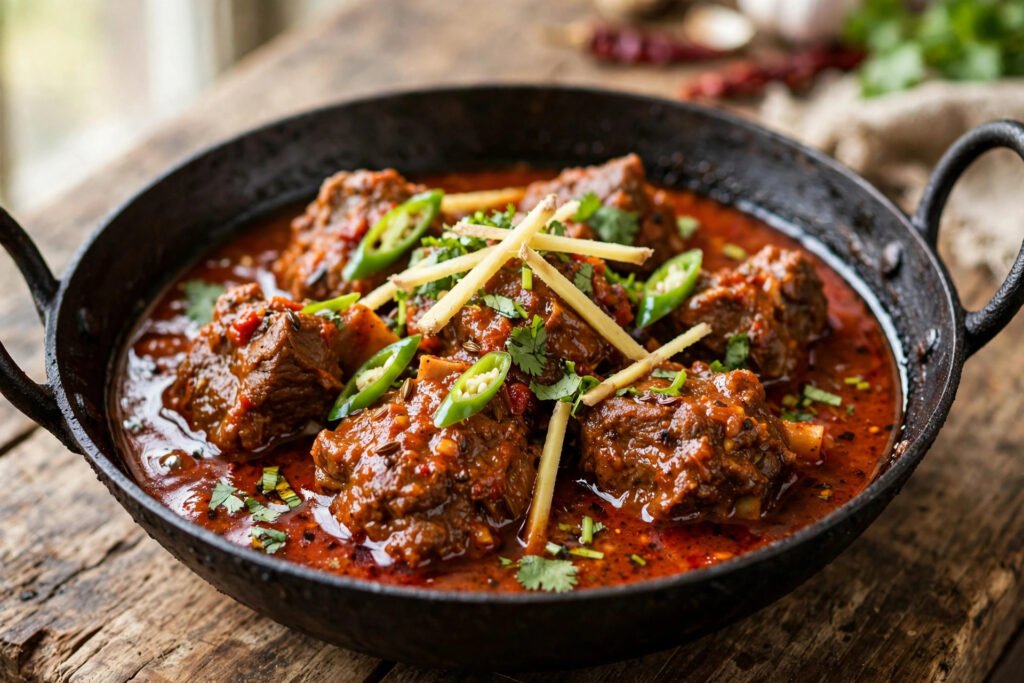
Nothing beats the smell of tomatoes sizzling in ghee at a roadside dhaba, and this mutton karahi recipe brings that exact experience into your home kitchen. Mutton karahi (also called gosht karahi) is one of Pakistan’s most loved meat dishes — tender pieces of goat meat cooked hard and fast in a wide wok with ripe tomatoes, fresh ginger, and green chilies until the oil separates and the gravy turns silky and deep red. The whole dish comes together in about 45 minutes, with no watery gravy and no complicated spice mix. Serve it with hot naan or tandoori roti and it tastes like the best dhaba in Lahore.
Prep Time: 10 minutes | Cook Time: 35 minutes | Servings: 4–5
Ingredients
- 1 kg mutton (goat meat), cut into medium pieces, on the bone
- 5 large ripe tomatoes, roughly chopped (or 1.5 cups tomato puree)
- 1 cup ghee or cooking oil
- 1 tablespoon ginger-garlic paste
- 1 teaspoon salt (or to taste)
- 1 teaspoon red chili powder
- 1 teaspoon crushed black pepper
- 1 teaspoon cumin seeds, lightly crushed
- 1/2 teaspoon turmeric powder
- 4–5 green chilies, slit lengthwise
- 1-inch piece of fresh ginger, cut into thin strips
- 1/2 cup fresh coriander leaves, chopped
- 1 teaspoon dried fenugreek leaves (kasuri methi), optional
- 2 tablespoons yogurt, optional (for a slightly softer gravy)
Instructions
- Sear the mutton. Heat the ghee or oil in a large karahi or heavy wok over high heat. Add the mutton pieces and fry for 6–8 minutes, turning often, until the meat is browned on all sides and the raw smell is gone. This hard sear is the secret of a good karahi — it builds flavor and keeps the meat from turning watery.
- Cook with tomatoes. Add the ginger-garlic paste, salt, red chili powder, black pepper, cumin seeds, and turmeric. Stir for a minute, then add the chopped tomatoes. Reduce the heat to medium, cover, and let it cook for 20–25 minutes. The tomatoes will break down into a thick gravy. Stir every few minutes and scrape the bottom so nothing sticks.
- Bhuno (fry) the gravy. Once the mutton is tender (check with a fork — it should slide off the bone), uncover and turn the heat back to high. Keep stirring and frying for 5–7 minutes until the oil separates from the gravy and it looks glossy and thick. This “bhuno” step is what gives dhaba-style mutton karahi its rich color and taste.
- Finish with fresh flavors. Stir in the slit green chilies, ginger strips, and half of the chopped coriander. Crush the kasuri methi between your palms and sprinkle it over the top (skip this if you like the plain classic version). If the gravy feels too thick, a spoon or two of yogurt stirred in now gives it a lovely sheen.
- Serve hot. Transfer the mutton karahi to a serving dish, garnish with the remaining coriander, ginger strips, and a few extra green chilies. Serve immediately with fresh naan, tandoori roti, or plain boiled rice.
Tips for the Best Mutton Karahi
- Use ripe tomatoes. The sweetness of fully ripe tomatoes balances the spices. If your tomatoes are pale, add a teaspoon of tomato paste for color.
- Don’t add water. A real karahi gravy comes from tomatoes alone. If the meat needs more time to soften, add half a cup of hot water — never cold — so the cooking doesn’t stall.
- Young meat cooks faster. Ask your butcher for young goat meat (“chota bakra”); it turns tender in about 25 minutes, while older meat can need 40+ minutes.
- High heat matters. A wide karahi and high heat evaporate the tomato juices quickly, which is exactly what creates the thick, oil-separated gravy dhabas are famous for.
- Rest before serving. Let the karahi sit covered for 5 minutes off the heat — the flavors settle and the gravy thickens a little more.
FAQs
How long does mutton take to become tender in karahi? Young goat meat takes about 25–30 minutes of covered cooking after the tomatoes go in. If you’re using older meat, allow 35–45 minutes, and use a pressure cooker for 2–3 whistles to cut the time if needed.
What is the difference between gosht karahi and mutton karahi? They are the same dish — “gosht” is simply the Urdu word for meat, so gosht karahi recipe and mutton karahi recipe refer to the same tomato-and-ginger goat curry.
Can I make mutton karahi without tomatoes? Traditional karahi always uses tomatoes — they form the gravy. Some home versions add a little yogurt instead, but skipping tomatoes entirely changes the dish into something closer to a bhuna gosht, not karahi.
What should I serve with mutton karahi? Hot naan or tandoori roti is the classic pairing, with sliced onions, lemon wedges, and a green salad on the side. It also works well with plain steamed basmati rice.