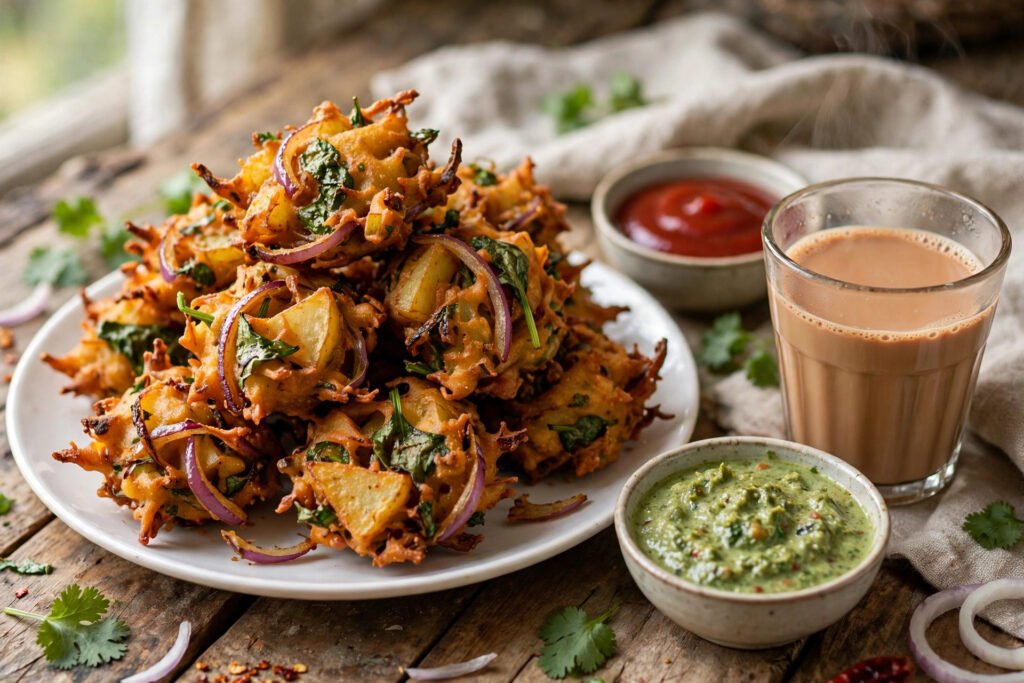
When dark clouds gather and the first rain hits the hot earth, every Pakistani kitchen starts smelling of pakoras. It is almost a law of nature: barish plus chai demands pakoras. These mixed vegetable pakoras are golden, crunchy little fritters made with besan (gram flour), sliced potatoes, onions, and spinach, seasoned with ajwain and green chilies. They take barely 20 minutes from bowl to plate, and they disappear even faster. What makes a great pakora is all in the batter. It should be thick enough to coat the vegetables but not so thick that the fritters turn doughy. A pinch of baking soda or a spoon of hot oil in the batter gives that airy, lacy crispness you get from a good dhaba. And the oil temperature matters more than anything — too cool and the pakoras soak up oil, too hot and they brown before cooking through. Fry a test piece first, then go. Prep Time: 15 minutes | Cook Time: 20 minutes | Servings: 4–5 Ingredients: – 1 cup besan (gram flour) – 2 tablespoons rice flour (for extra crunch) – 2 medium potatoes, thinly sliced – 2 medium onions, thinly sliced – 1 cup fresh spinach leaves, chopped – 2 green chilies, finely chopped – 1 teaspoon ajwain (carom seeds) – 1 teaspoon cumin seeds, lightly crushed – 1/2 teaspoon red chili powder – 1/2 teaspoon turmeric powder – 1/2 teaspoon baking soda – 1 teaspoon salt (or to taste) – 1 tablespoon hot oil (for the batter) – 1/4 cup water (approximately) – Fresh coriander leaves, chopped – Oil for deep frying Instructions: 1. Put all the sliced vegetables — potatoes, onions, spinach, green chilies — in a large mixing bowl. Sprinkle the salt over them and toss. Let them sit for 5 minutes; the salt draws out moisture, which means you will need less water in the batter. 2. Add the besan, rice flour, ajwain, cumin seeds, red chili powder, and turmeric to the bowl. Mix everything with your hands so every vegetable piece is coated in the dry flour. 3. Pour in the hot oil and mix again — this little trick makes the pakoras extra crisp. 4. Add water a spoonful at a time, mixing until you get a thick batter that clings to the vegetables. It should not be runny. Stir in the baking soda and fresh coriander at the very end. 5. Heat oil in a deep karahi over medium heat. Test the temperature by dropping in a small bit of batter — it should sizzle and rise to the surface within a couple of seconds, surrounded by steady bubbles. 6. Drop tablespoon-sized portions of the battered vegetables into the oil with your fingers or a spoon. Do not overcrowd the karahi; fry in batches of 8–10. 7. Fry for 4–5 minutes, turning occasionally with a slotted spoon, until the pakoras are deep golden and crisp on all sides. 8. Lift them out with the slotted spoon, letting the excess oil drip back, and drain on a wire rack or paper towel. Sprinkle a pinch of chaat masala over the hot pakoras. 9. Serve immediately with mint chutney, ketchup, and steaming cups of chai. Tips: – Thin, even vegetable slices cook through and crisp up best. Thick potato slices stay raw in the middle. – Always mix the batter just before frying. If it sits too long, it releases water and turns runny, and the pakoras go flat. – Keep the oil at a steady medium heat. If the pakoras brown too fast, lower the heat; if they look pale and greasy, raise it slightly. – Rice flour is the secret to long-lasting crunch — pakoras made with besan alone soften faster. – Leftover batter keeps in the fridge for a day, but the vegetables release water, so mix in a spoon of besan before reusing. FAQs: Q: Why are my pakoras oily and soft? A: The oil was not hot enough. The batter should sizzle and rise immediately when it hits the oil. Also, do not overcrowd the pan — it drops the oil temperature. Q: Can I bake or air-fry pakoras instead? A: Yes. Shape the batter into small mounds on a greased tray, spray with oil, and bake at 200°C for 20–25 minutes, flipping halfway. They will be tasty, though slightly less crisp than fried. Q: Which vegetables work best in pakoras? A: Potatoes, onions, and spinach are the classic trio. Cauliflower florets, brinjal slices, green chilies, and even methi leaves also make excellent pakoras.