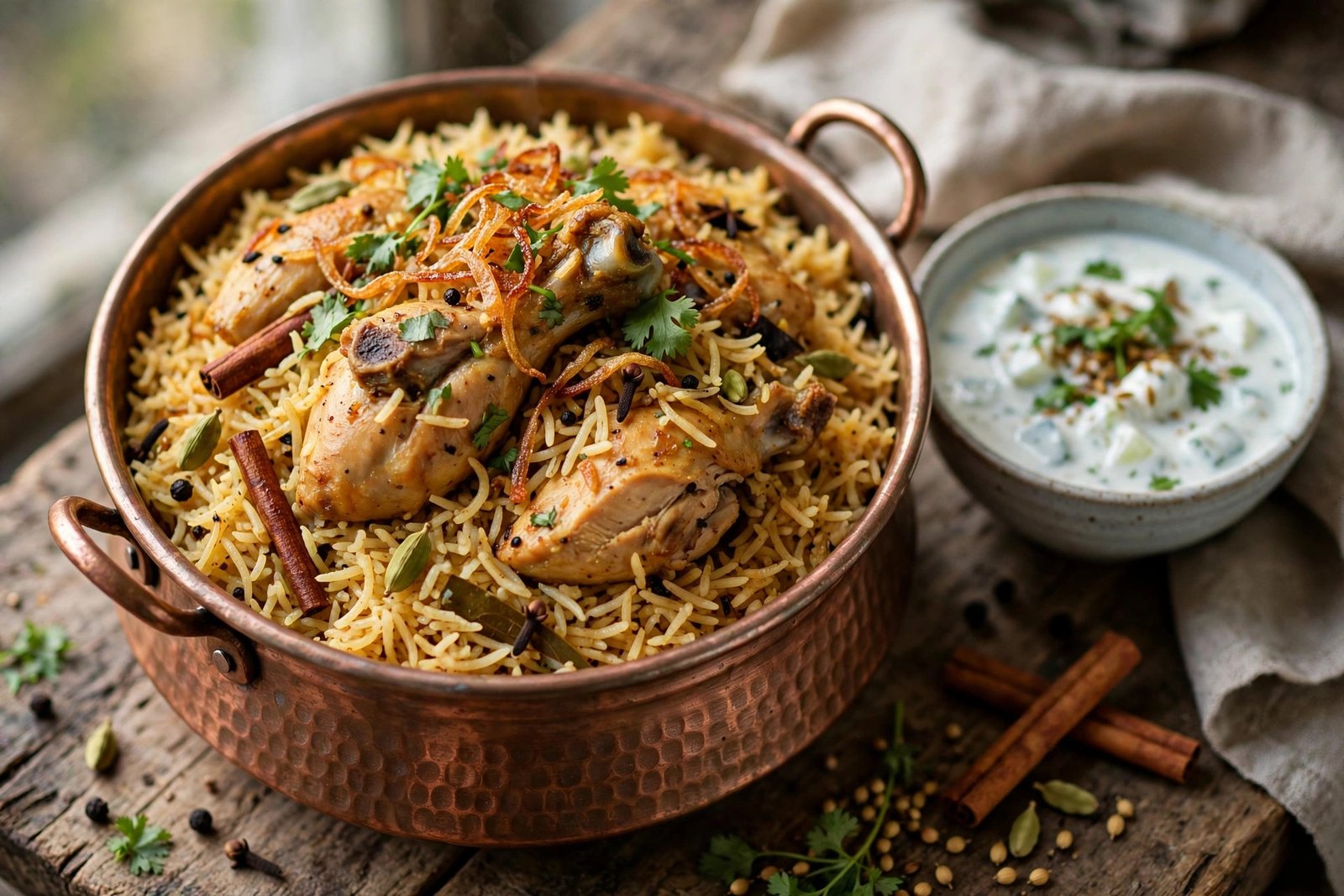
Chicken pulao is the quiet hero of desi cooking. It does not shout like biryani with its layers and colors — instead, it wins you over gently, with rice steeped in a fragrant chicken broth, whole spices whispering in the background, and tender chicken tucked between the grains. Every spoonful tastes of comfort: homely, warming, and deeply satisfying.
What makes a great pulao is the yakhni — the stock made by simmering chicken with whole spices and aromatics. The rice cooks in this flavorful broth and absorbs all of it, which is why pulao tastes so much richer than plain boiled rice. It is a complete one-pot meal: protein, carbs, and comfort in a single dish. Serve it with raita and a simple salad, and dinner is sorted. This recipe gives you soft, separate grains and juicy chicken every time.
Prep Time: 20 minutes | Cook Time: 50 minutes | Servings: 5–6
Ingredients:
For the yakhni (stock):
– 750 g chicken, bone-in pieces
– 1 large onion, quartered
– 1 whole garlic bulb (unpeeled, cut in half)
– 1-inch piece of ginger, sliced
– 2 bay leaves
– 6–8 black peppercorns
– 4–5 green cardamoms
– 1 black cardamom
– 4–5 cloves
– 1 cinnamon stick (2-inch)
– 1 teaspoon cumin seeds
– 1 tablespoon coriander seeds
– 1 teaspoon salt
– 6 cups water
For the pulao:
– 3 cups basmati rice, soaked 30 minutes and drained
– 1 large onion, thinly sliced
– 2 tomatoes, chopped
– 2 tablespoons ginger-garlic paste
– 3–4 green chilies, slit
– 1/2 cup cooking oil or ghee
– 1 teaspoon salt (adjust after tasting yakhni)
– Crispy fried onions and fresh coriander for garnish
Instructions:
1. Start with the yakhni. Put the chicken, 6 cups of water, and all the yakhni spices, onion, garlic, and ginger into a large pot. Bring to a boil, then lower the heat and simmer for 25–30 minutes until the chicken is tender and the broth is fragrant.
2. Strain the yakhni through a fine sieve into a bowl. You should have about 4.5–5 cups of stock. Set the chicken pieces aside and discard the boiled spices and aromatics.
3. In a large heavy-bottomed pot, heat the oil or ghee. Fry the sliced onions until deep golden brown. Remove half for garnish and keep half in the pot.
4. Add the ginger-garlic paste and slit green chilies to the pot. Stir for a minute, then add the chopped tomatoes and cook until soft and the oil separates.
5. Add the boiled chicken pieces and fry gently for 3–4 minutes so they pick up the masala flavor.
6. Pour in the strained yakhni and add salt. Taste the broth — it should taste slightly saltier than you want the final rice, since the rice will absorb it. Bring to a rolling boil.
7. Add the drained soaked rice and stir once gently. Let it cook on high heat until most of the water evaporates and craters form on the surface of the rice (about 8–10 minutes).
8. Lower the heat to the minimum, cover the pot with a tight lid (place a clean kitchen towel under the lid to trap steam), and let it steam on dum for 12–15 minutes. Do not open the lid during this time.
9. Turn off the heat and let it rest, covered, for 10 more minutes. Then open and fluff gently with a fork, mixing from the sides so the grains stay separate.
10. Garnish with the reserved crispy fried onions and fresh coriander. Serve hot with raita and salad.
Tips:
– The yakhni is everything. Do not rush it — a full 30-minute simmer gives the rice its signature deep flavor.
– The rice-to-stock ratio matters: for 3 cups of soaked basmati, you need about 4.5 cups of yakhni. Too much liquid makes mushy rice; too little leaves it undercooked.
– Soaking the rice for 30 minutes is non-negotiable. It helps the grains cook evenly and grow long.
– Never stir the rice vigorously after adding it — one gentle stir is enough. Rough handling breaks the grains.
– Leftover pulao reheats beautifully: sprinkle a few spoonfuls of water over it and steam covered on low heat for 10 minutes.
FAQs:
Q: What is the difference between pulao and biryani?
A: In pulao, the rice cooks directly in the yakhni (meat stock), so the flavor is absorbed into every grain — it is a one-pot dish. In biryani, rice and meat curry are cooked separately and then layered, with more intense spices, food color, and garnishes. Pulao is milder and simpler; biryani is bolder and more festive.
Q: Can I make chicken pulao in a rice cooker or instant pot?
A: Yes. Prepare the yakhni and the masala base on the stovetop as described, then transfer everything with the rice to the rice cooker and cook on the regular rice setting. For an instant pot, pressure cook on high for 5 minutes with natural release for 10 minutes.
Q: Why did my pulao rice turn out sticky?
A: The usual culprits are too much water, skipping the soak, or lifting the lid during dum. Measure your yakhni carefully, soak the rice, and resist the urge to peek while it steams — the trapped steam is what finishes the cooking.