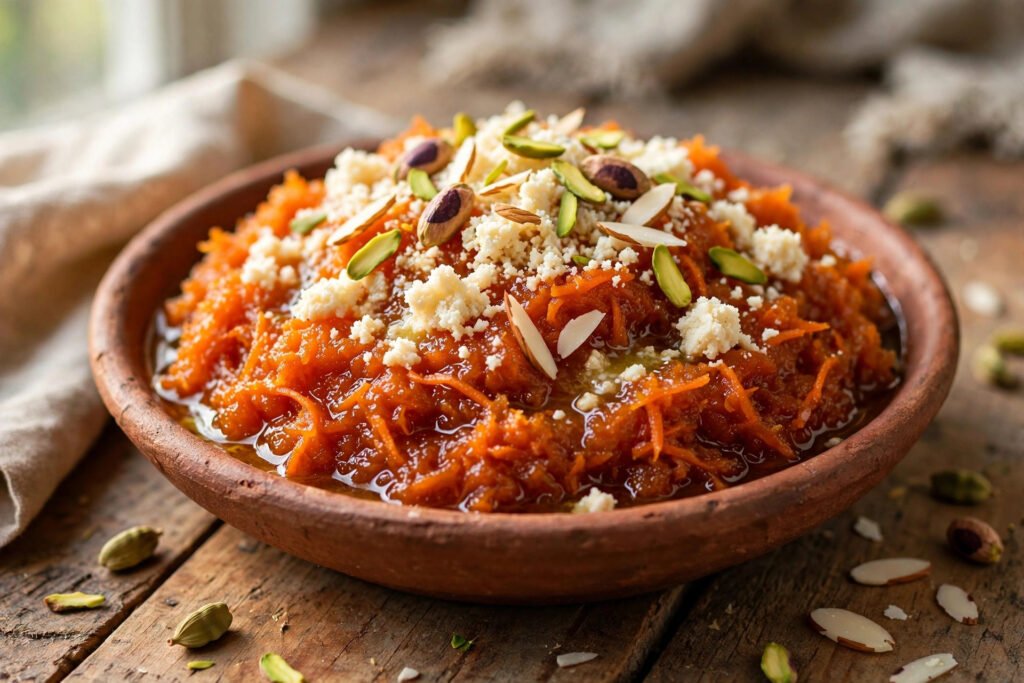
When winter arrives in Pakistan, so does the smell of gajar ka halwa. It drifts out of kitchens in December and January, rich with ghee and cardamom, and it is impossible to walk past without wanting a warm spoonful. Made from the season’s deep-red carrots, slow-cooked in milk until they turn meltingly soft, this is the dessert that defines Pakistani winters.
Gajar ka halwa is not a quick dessert, and it does not pretend to be. It asks for a little over an hour of your time and rewards you with something no store-bought sweet can match. The carrots caramelize slowly, the milk reduces into creamy sweetness, and the ghee brings everything together into a glossy, fragrant halwa. If you have never made it at home, this winter is the time to start.
Prep Time: 25 minutes | Cook Time: 1 hour 15 minutes | Servings: 6
Ingredients:
– 1 kg red carrots, peeled and finely grated
– 1 liter full-cream milk
– 3/4 cup sugar, adjusted to taste
– 1/2 cup desi ghee
– 100 grams khoya (mawa), crumbled
– 5 green cardamom pods, crushed
– 3 tablespoons chopped almonds
– 3 tablespoons chopped pistachios
– 2 tablespoons raisins (optional)
Instructions:
1. Place the grated carrots and the milk in a large, heavy-bottomed wok or pot. Bring to a boil over medium-high heat, then reduce to medium-low and let it cook, stirring occasionally. The carrots will slowly soften and the milk will start to reduce. This stage takes about 30 to 35 minutes. Do not walk away for too long. Stir and scrape the bottom so nothing sticks or burns.
2. When most of the milk has been absorbed and the mixture looks thick and porridge-like, add the sugar and the crushed cardamom. Stir well. The sugar will release moisture and the mixture will turn loose again. That is completely normal.
3. Keep cooking on medium heat, stirring more frequently now, until the liquid dries up again. This takes another 15 to 20 minutes. You will see the color deepen into a rich, dark orange-red.
4. Now add the ghee, a little at a time, stirring continuously. This is the bhunai stage, and it is where the magic happens. Keep frying the halwa in the ghee for 10 to 12 minutes. You will know it is done when the ghee starts to separate and glisten at the edges, and the halwa pulls away from the sides of the pan in a glossy mass. The raw smell of carrot should be completely gone, replaced by a deep, caramelized aroma.
5. Crumble in the khoya and stir it through until it melts into the halwa. Add the almonds, pistachios, and raisins, and mix well. Cook for 2 more minutes, then turn off the heat.
6. Transfer to a serving dish and garnish with extra nuts. Serve warm. Gajar ka halwa tastes wonderful on its own, and even better with a scoop of vanilla ice cream or a dollop of fresh cream on the side.
Tips:
– Use the deep-red winter carrots (desi gajar) if you can find them. They are sweeter, juicier, and give the halwa its signature color. Regular orange carrots work too, but the result will be a little paler and less sweet, so you may need a touch more sugar.
– Grate the carrots finely and evenly. Thick, uneven shreds cook at different rates and some pieces stay crunchy.
– Do not rush the milk-reduction stage. That slow cooking is what builds the deep flavor. High heat will scorch the milk before the carrots are done.
– The halwa keeps well in the fridge for up to a week. Warm it in a pan with a teaspoon of ghee before serving to bring back the fresh-made taste and shine.
FAQs:
Q: Can I make gajar ka halwa with orange carrots?
A: Yes, you can. The halwa will still taste good, but it will be lighter in color and slightly less sweet than the traditional red-carrot version. Taste and adjust the sugar at the end, since orange carrots vary in sweetness.
Q: Can I reduce the sugar or use less ghee?
A: You can reduce the sugar to about half a cup without harming the texture. The ghee, though, is harder to cut. It carries the flavor and gives the halwa its glossy finish. Reducing it too much will leave the halwa dry and less fragrant.
Q: Why is my halwa pale instead of deep red?
A: Pale halwa usually means one of two things: orange carrots instead of red ones, or not enough bhunai time in ghee. Let the halwa fry in ghee until it darkens and the ghee separates. That caramelization is what creates the rich color.