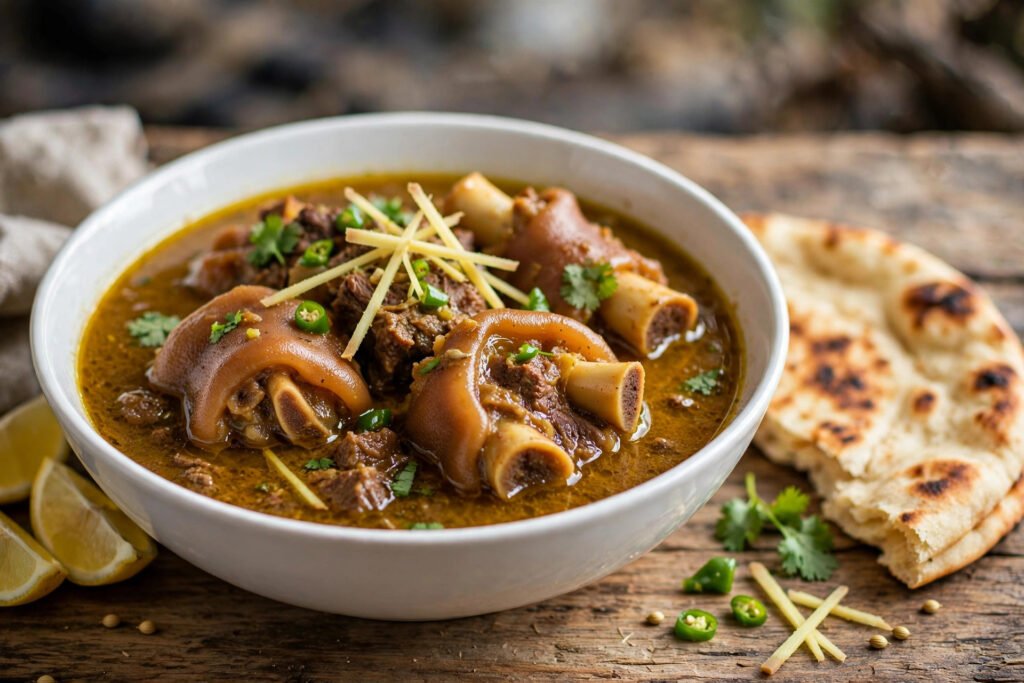
If there is one dish that defines a slow Sunday morning in Lahore, Karachi, or Multan, it is paye — beef trotters simmered for hours until the rich broth turns thick and silky. This paye recipe Pakistani style follows the traditional method: cleaned trotters, a whole-spice tarka base, and a long, patient cook that breaks the meat down into tender, spoon-soft pieces. It is the same siri paye recipe served at old-city shops from pre-dawn, but made completely doable in a home kitchen.
If you love slow-cooked beef dishes, don’t miss our slow-cooked beef nihari and thick, hearty Pakistani haleem.
Prep Time: 30 minutes | Cook Time: 4–5 hours (or 1 hour in a pressure cooker) | Servings: 6
Ingredients:
– 1.5 kg beef trotters (paye), cleaned and washed well
– 1 large onion, finely sliced
– 4 tbsp oil or ghee
– 1 tbsp ginger-garlic paste
– 2 tbsp paya masala or garam masala powder
– 1 tbsp red chili powder
– 1 tsp turmeric powder
– 2 tsp coriander powder
– 1 tsp cumin seeds
– 4–5 green cardamom pods
– 2 black cardamom pods
– 1-inch cinnamon stick
– 4–5 cloves
– 2 bay leaves
– Salt to taste
– 8–10 cups water (for the open-pot method)
– 2 tbsp wheat flour mixed with ½ cup water (for thickening, optional)
For garnish:
– Fresh julienned ginger, lemon wedges, chopped green chilies, fresh coriander
Instructions:
1. Clean the trotters thoroughly. Rinse them several times under running water and rub with a little salt and lemon juice to remove any residue, then rinse again. This step keeps the final broth clean and clear.
2. Parboil the paye. Place the trotters in a large pot with enough water to cover them and bring to a rolling boil for 10 minutes. Skim off the foam that rises, then drain and discard this water. This removes impurities and any strong smell.
3. Build the base. Heat the oil or ghee in a heavy-bottomed pot or karahi over medium heat. Fry the sliced onion until deep golden brown. Add the ginger-garlic paste and cook for a minute until fragrant.
4. Add the whole spices. Toss in the cumin seeds, green and black cardamom, cinnamon, cloves, and bay leaves. Stir for 30 seconds so the spices bloom in the oil.
5. Add the ground spices. Lower the heat and add red chili powder, turmeric, coriander powder, and half of the garam masala. Splash in a few tablespoons of water so the spices do not burn, and fry the masala for 2–3 minutes until the oil separates.
6. Add the trotters. Add the parboiled paye to the pot and mix well so every piece is coated in the masala. Add salt and pour in 8–10 cups of hot water — it should cover the trotters by at least 3 inches.
7. Simmer low and slow. Bring to a boil, then reduce the heat to the lowest setting, cover, and cook for 4–5 hours. Check every hour, stirring gently and topping up with hot water if needed. The paye are done when the meat is falling off the bone and the broth coats the back of a spoon.
8. Thicken the broth (optional). If you like a thicker paye, whisk the wheat flour slurry and stir it in during the last 30 minutes of cooking. This is the classic bazaar-style finish.
9. Finish and rest. Stir in the remaining garam masala and let the paye rest, covered, for 15–20 minutes before serving — the flavors settle beautifully.
Serve hot in deep bowls with a squeeze of lemon, julienned ginger, green chilies, and fresh coriander on top. Fresh naan, kulcha, or sheermal are the traditional partners for mopping up every drop of the broth.
Tips:
– Never rush paye. The long cook is what converts the connective tissue into that signature sticky, gelatinous broth. A pressure cooker can cut the time to about 45–60 minutes, but the open-pot method gives a deeper flavor.
– Always parboil and skim. Skipping the parboil step leaves the broth cloudy and gamey — ten minutes here pays off all through the dish.
– Toast your garam masala fresh if you can. Grinding whole spices at home gives a paye that tastes noticeably richer than one made with packet masala.
– Leftovers get better. Like most slow-cooked dishes, paye tastes even better the next day. Refrigerate overnight and gently reheat, adding a splash of water if the broth has thickened too much.
FAQs:
Q: Can I make paye with mutton trotters instead of beef?
A: Yes — mutton or goat paye cook a little faster (3–4 hours) and taste just as good. Follow the same method; just check tenderness earlier.
Q: Why is my paye broth thin and watery?
A: Two usual reasons: not enough cooking time, or too much water. Let it simmer longer uncovered in the last hour so it reduces, and try the wheat-flour slurry trick for a bazaar-style thick broth.
Q: How long do paye keep in the fridge?
A: Store in an airtight container for up to 3 days. The broth sets into a jelly when cold — that is completely normal and a sign of a well-made paye. Reheat gently before serving.