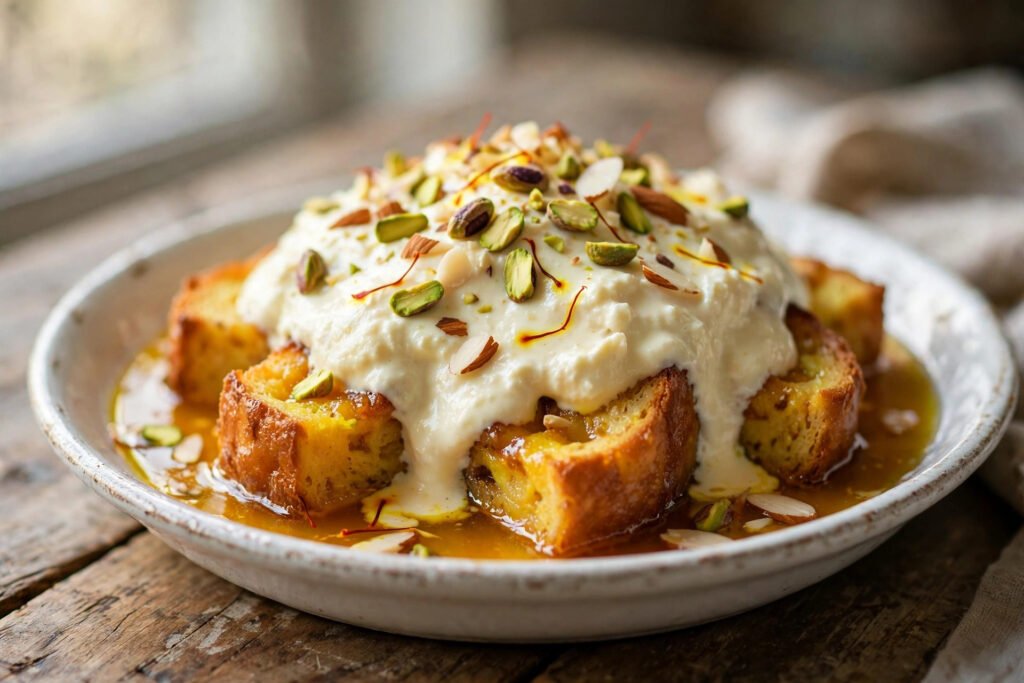
Shahi tukray is the dessert of kings — literally. Its name means “royal pieces,” and this shahi tukray recipe turns humble bread slices into a rich, saffron-soaked pudding crowned with thick rabri and a shower of pistachios. It is a beloved sweet across Pakistan and India (where it is often spelled shahi tukde), a fixture at weddings, Eid dawats, and Ramadan iftar tables. The good news: it takes under an hour, uses pantry basics, and tastes like you ordered it from a shadi caterer.
Prep Time: 15 minutes | Cook Time: 40 minutes | Servings: 6–8
Ingredients:
For the fried bread:
- 8 slices of white bread (day-old works best)
- 1 cup ghee or neutral oil, for frying
For the sugar syrup:
- 1 cup sugar
- 3/4 cup water
- 4–5 green cardamom pods, lightly crushed
- A good pinch of saffron strands
- 1 teaspoon rose water (optional)
For the rabri topping:
- 1 liter full-fat milk
- 1/2 cup sugar
- 4 green cardamom pods, crushed
- 2 tablespoons chopped almonds
- 2 tablespoons chopped pistachios
- A pinch of saffron (optional)
Instructions:
- Make the rabri first. Pour the milk into a wide, heavy-bottomed pan and bring it to a gentle boil over medium heat. Lower the heat and simmer, stirring often and scraping the sides, until the milk reduces to about half its volume and coats the back of a spoon — roughly 25–30 minutes.
- Stir the sugar, crushed cardamom, and saffron into the reduced milk. Simmer 5 more minutes until thick and creamy, then remove from heat and let it cool. The rabri will thicken further as it cools.
- Meanwhile, make the syrup. Combine the sugar, water, cardamom, and saffron in a saucepan. Bring to a boil, then simmer for 5–6 minutes until slightly sticky — you want a light one-string consistency, not a thick candy syrup. Stir in the rose water and keep warm.
- Trim the crusts off the bread slices and cut each slice diagonally into two triangles. Heat the ghee or oil in a shallow pan over medium heat. Fry the bread triangles in batches, about 1–2 minutes per side, until deep golden and crisp. Drain on a wire rack or paper towel.
- Arrange the fried bread in a single layer in a wide serving dish. While the bread is still warm, ladle the warm sugar syrup evenly over it so every piece soaks it up. Let it rest 10 minutes so the bread absorbs the syrup fully.
- Pour the cooled rabri generously over the soaked bread, covering every piece. Garnish with chopped almonds, pistachios, and a few extra saffron strands.
- Cover and chill for at least 1–2 hours (overnight is even better). Serve cold, with extra chilled rabri on the side if you like.
Tips:
- Day-old bread is the secret. Fresh soft bread soaks up too much oil and turns soggy; slightly stale bread fries up crisp and holds its shape in the syrup.
- Keep the syrup light. An over-thick syrup makes shahi tukray sticky and heavy instead of meltingly soft. Warm syrup over warm bread gives the best absorption.
- Do not rush the rabri. Slow reduction is what gives rabri its signature creamy, slightly caramelized flavor. Resist the urge to crank the heat — scorched milk will ruin it.
- Make-ahead win: both the soaked bread and the rabri can be prepared a day ahead and stored separately in the fridge; assemble and garnish a few hours before serving.
FAQs:
1. What is the difference between shahi tukray and shahi tukde?
There is no real difference — it is the same dessert. “Shahi tukray” is the common spelling in Pakistan, while “shahi tukde” is more often used in India. The recipe, the rabri, and the saffron syrup are identical.
2. Can I bake the bread instead of frying it?
Yes. Brush the bread triangles lightly with melted ghee and bake at 200°C (400°F) for 10–12 minutes, flipping once, until golden and crisp. The result is lighter, though classic shahi tukray is always deep-fried.
3. How long does shahi tukray last in the fridge?
Properly covered, it keeps for 3–4 days refrigerated. In fact, many people find it tastes even better on day two, once the flavors have fully melded.