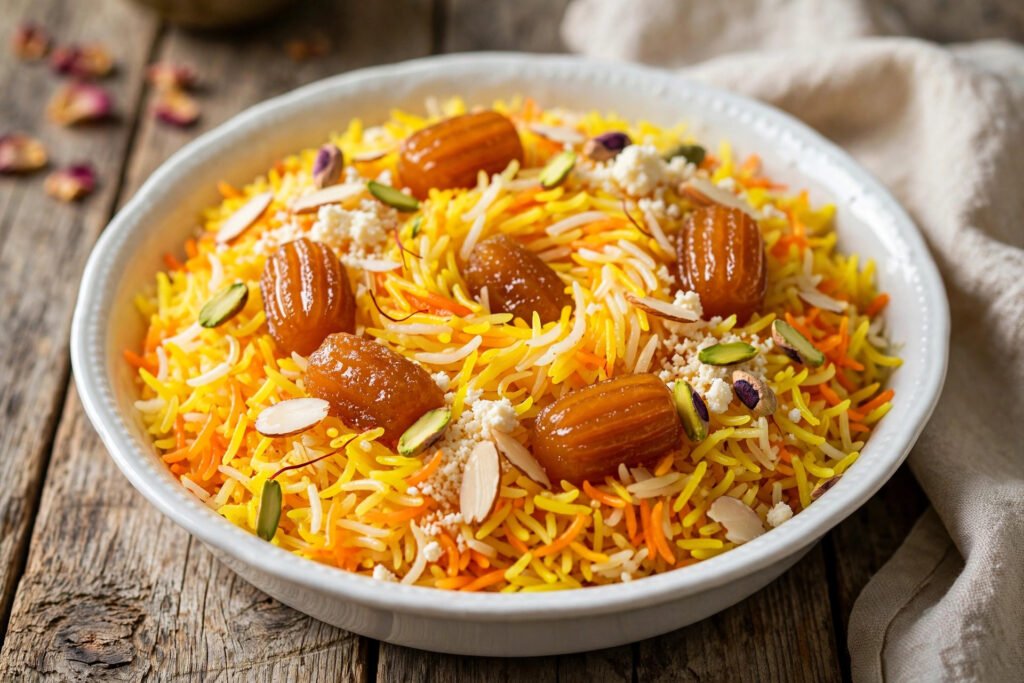
Zarda recipe, also written as zarda rice or sweet rice zarda, is the festive dessert rice that shows up at every Pakistani wedding, Eid table, and dholki night. Basmati rice cooked in sugar syrup, dyed festive yellow and orange, studded with khoya, ashrafi (candied sweets), and crunchy nuts — this shadi-style zarda recipe is easier than it looks, and it feeds a crowd beautifully. Whether you spell it zarda or mutanjan, the method below gives you separated, glossy grains every time.
Prep Time: 15 minutes | Cook Time: 40 minutes | Servings: 8
Ingredients
- 3 cups basmati rice (soaked 30 minutes, drained)
- 2½ cups sugar
- 3½ cups water
- ½ cup ghee (desi ghee works best)
- ½ cup khoya, crumbled
- 1 tsp green cardamom seeds, lightly crushed
- 1 tsp yellow food color (zarda rang)
- ½ tsp orange food color
- ½ cup ashrafi (colorful candied sweets, chopped if large)
- ⅓ cup mixed nuts: almonds, pistachios, cashews (sliced or chopped)
- 2 tbsp raisins
- 1 tbsp rose water or kewra water
- 4–5 cloves (optional, for aroma)
- Pinch of salt
Instructions
- Boil the rice part-way. Bring a large pot of water to a rolling boil with a pinch of salt. Add the soaked basmati and cook until it is about 75% done — the grain should be soft outside with a slightly firm core. Drain immediately in a colander and set aside.
- Make the syrup. In a wide, heavy-bottomed pot or degchi, combine sugar and 3½ cups water. Stir over medium heat until the sugar dissolves, then add the yellow and orange food colors, crushed cardamom, and cloves. Let it simmer for 2 minutes until slightly syrupy.
- Temper in ghee. Add the ghee to the syrup and let it melt in. Toss in half the nuts and the raisins; fry them in the ghee-syrup for a minute until they puff slightly and smell fragrant.
- Add the rice. Gently fold the drained rice into the syrup so every grain is coated. Do not stir roughly — use a light folding motion with a spatula to keep grains long and unbroken.
- Steam (dum). Cover the pot with a tight lid, reduce heat to the lowest setting, and steam for 20–25 minutes. If your lid is loose, place a clean kitchen towel under it to trap steam.
- Finish with khoya and ashrafi. Open the pot and check that the rice grains are separate and glossy. Gently fold in the crumbled khoya, ashrafi, remaining nuts, and rose or kewra water. Cover for 5 more minutes on dum so the khoya melts slightly into the rice.
- Serve. Transfer to a wide dish and garnish with a few extra pistachios and ashrafi on top. Serve warm or at room temperature.
Tips
- Don’t overcook the rice at step 1. Rice finishes cooking in the syrup; if you fully cook it first, zarda turns mushy. When in doubt, drain a minute early.
- Use desi ghee for the classic shadi-style aroma — oil simply doesn’t give the same result.
- Soak the basmati for at least 30 minutes; soaked grains cook evenly and stay long, which is the hallmark of good zarda.
- Go easy on the color. Start with less zarda rang and add more — you can always deepen the color, but you can’t take it back.
- Khoya substitute: if you can’t find khoya, use ricotta-style paneer crumbled fine, or ½ cup milk powder stirred into 2 tbsp warm milk.
FAQs
Why is my zarda sticky?
Usually the rice was overcooked before adding to the syrup, or too much syrup was used. Keep the sugar-to-rice ratio as given and drain the rice at 75% doneness — grains should finish cooking on dum, not in the boiling water.
Can I make zarda without food color?
Yes. It will taste the same but won’t have the festive look. A natural option is to steep a pinch of saffron (kesar) in warm water and add it to the syrup for a golden hue.
How long does zarda keep?
Store in an airtight container in the fridge for up to 3 days. Warm it gently in the microwave or a pan with a sprinkle of water before serving.