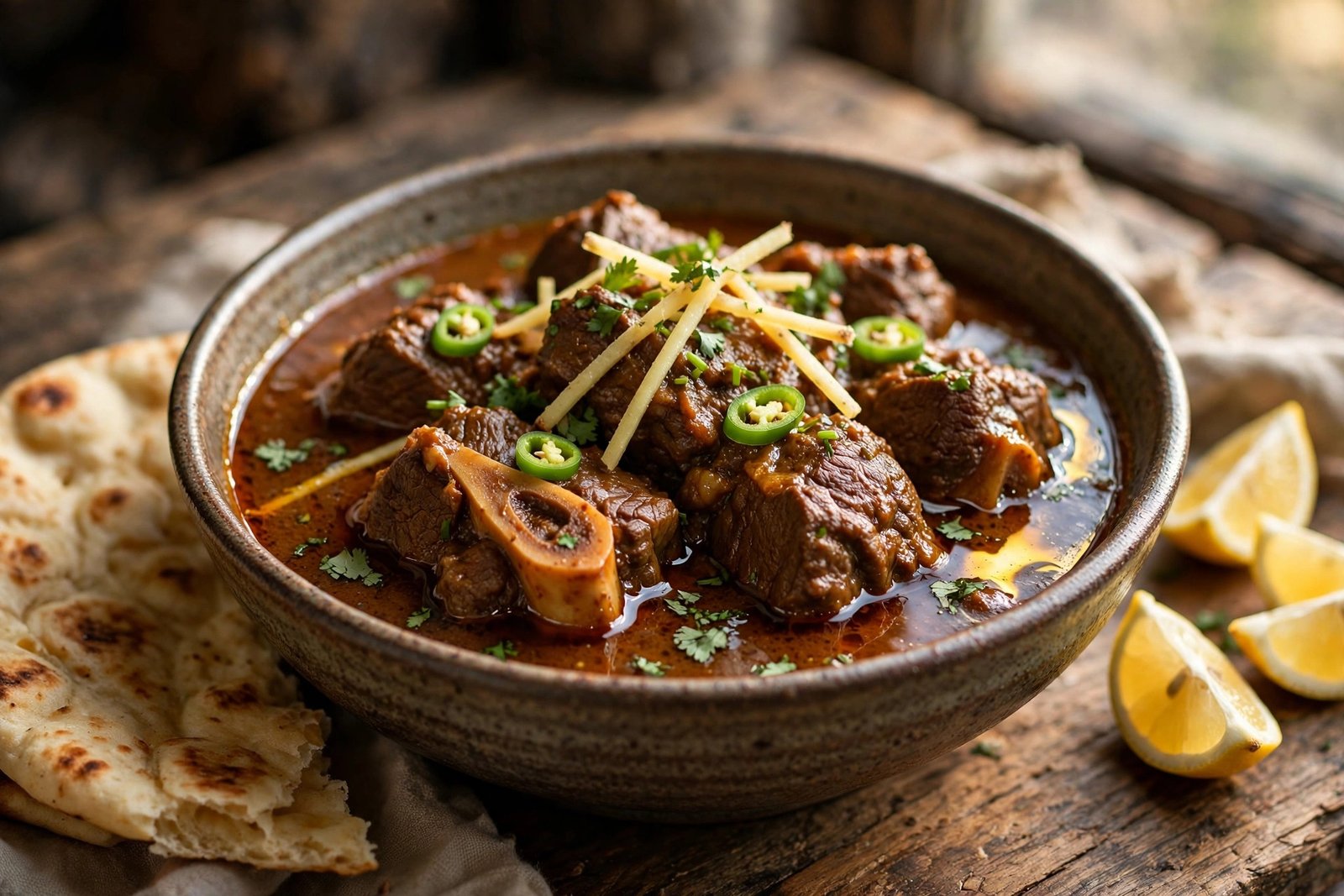
If there is one dish that defines slow cooking in Pakistan, it is nihari. This rich, velvety beef stew — simmered overnight until the meat falls off the bone — is the centerpiece of Sunday breakfasts, Eid feasts, and dhabas across Lahore, Karachi, and Delhi’s old streets. This nihari recipe keeps the traditional method honest: whole spices toasted fresh, beef shank cooked low and slow, and that signature silky gravy that only patience can build. If you’ve been searching for “nihari banane ka tarika” in English, this is the complete step-by-step guide.
Prep Time: 20 minutes | Cook Time: 4–5 hours | Servings: 6
Ingredients: Authentic Nihari Recipe
For the meat:
- 1 kg beef shank (bone-in pieces, marrow bones preferred), cut into large chunks
- 2 large onions, thinly sliced
- 1 cup oil or ghee
- 2 tbsp ginger-garlic paste
- 2 tsp salt (adjust to taste)
- 1 tsp red chili powder
- 1 tsp turmeric powder
- 4 cups water (plus more as needed)
For the nihari masala (fresh-ground):
- 1 tbsp fennel seeds (saunf)
- 1 tbsp cumin seeds
- 1 tsp black peppercorns
- 1 tsp green cardamom seeds (pods removed)
- 4–5 cloves
- 2 black cardamom pods
- 2 bay leaves
- 1-inch cinnamon stick
- 1/2 tsp nutmeg powder
- 1 blade of mace (javitri)
For thickening:
- 1/4 cup whole wheat flour (atta), mixed into a smooth paste with 1 cup water
For garnish:
- Fresh ginger, cut into thin juliennes
- 2–3 green chilies, slit
- Fresh coriander leaves, chopped
- Lemon wedges
- 1 tsp ghee (optional, for finishing)
Instructions: How to Make Nihari
Step 1 – Toast and grind the masala. Dry-roast the fennel seeds, cumin, peppercorns, cardamoms, cloves, bay leaves, cinnamon, and mace in a pan for 2 minutes until fragrant. Let cool, then grind to a fine powder with the nutmeg. This fresh nihari masala is the soul of the dish — don’t skip it.
Step 2 – Brown the onions. Heat the oil or ghee in a heavy-bottomed pot or pressure cooker over medium heat. Add the sliced onions and fry until deep golden brown, about 10–12 minutes. Remove half the onions with a slotted spoon and set aside for garnish.
Step 3 – Sear the meat. Add the ginger-garlic paste to the remaining onions and cook for 1 minute. Add the beef shank pieces, salt, red chili powder, and turmeric. Cook on medium-high heat for 8–10 minutes, turning the pieces, until the meat is well seared on all sides.
Step 4 – Add the masala and water. Stir in the ground nihari masala and cook for 2 minutes so the spices bloom in the oil. Pour in 4 cups of water, bring to a boil, then reduce the heat to the lowest setting.
Step 5 – Slow-cook until tender. Cover and simmer gently for 3.5 to 4.5 hours, stirring occasionally, until the beef is completely tender and nearly falling off the bone. Add hot water if the level drops too low. (Pressure-cooker shortcut: cook on high pressure for 40 minutes instead.)
Step 6 – Thicken the gravy. Slowly pour in the atta paste while stirring constantly so no lumps form. Simmer for 20–25 more minutes, stirring now and then, until the gravy turns thick, glossy, and coats the back of a spoon. A thin layer of oil rising to the surface is a good sign — this is the famous “tari.”
Step 7 – Garnish and serve. Ladle into bowls and top with the reserved browned onions, ginger juliennes, green chilies, coriander, and a squeeze of lemon. Serve piping hot with naan, khameeri roti, or tandoori roti.
Tips for Perfect Beef Nihari
- Choose the right cut. Beef shank with marrow bones gives the richest, stickiest gravy. Lean boneless beef will cook faster but won’t have the same depth.
- Low and slow wins. The 4-hour simmer is non-negotiable for authentic texture — rushing it on high heat makes the meat tough instead of melting.
- Bloom the spices. Frying the ground masala in oil for 2 minutes before adding water deepens the flavor dramatically.
- Make it ahead. Nihari tastes even better the next day, as the flavors settle. Refrigerate overnight and gently reheat — the gravy will be thicker and richer.
- Freezer-friendly. Cool completely, portion into containers, and freeze for up to 2 months. Thaw overnight in the fridge before reheating.
FAQs
Can I make nihari with mutton instead of beef? Yes — mutton nihari is equally traditional. Use mutton shank or leg pieces and reduce the simmering time to about 2.5–3 hours, since mutton cooks faster than beef.
Why is my nihari gravy thin? The most common cause is adding too much water or skipping the atta paste. Add the flour paste slowly with constant stirring, then simmer uncovered for another 20 minutes until it thickens and the oil separates.
What do you serve with nihari? Classic pairings are hot tandoori naan or khameeri roti for scooping up the gravy, plus the fresh garnishes — ginger, lemon, and green chilies — which cut through the richness perfectly.
More slow-cooked favorites: thick and hearty Haleem, classic Aloo Gosht, and protein-packed Chana Masala — all made for scooping up with hot naan.
Pingback: Haleem Recipe – Thick & Hearty Pakistani Haleem (Slow-Cooked) - Desi Zaika
Pingback: Paye Recipe – Slow-Cooked Pakistani Beef Trotters (Siri Paye) - Desi Zaika
Pingback: Chapli Kabab Recipe – Juicy Peshawari Beef Chapli Kababs - Desi Zaika